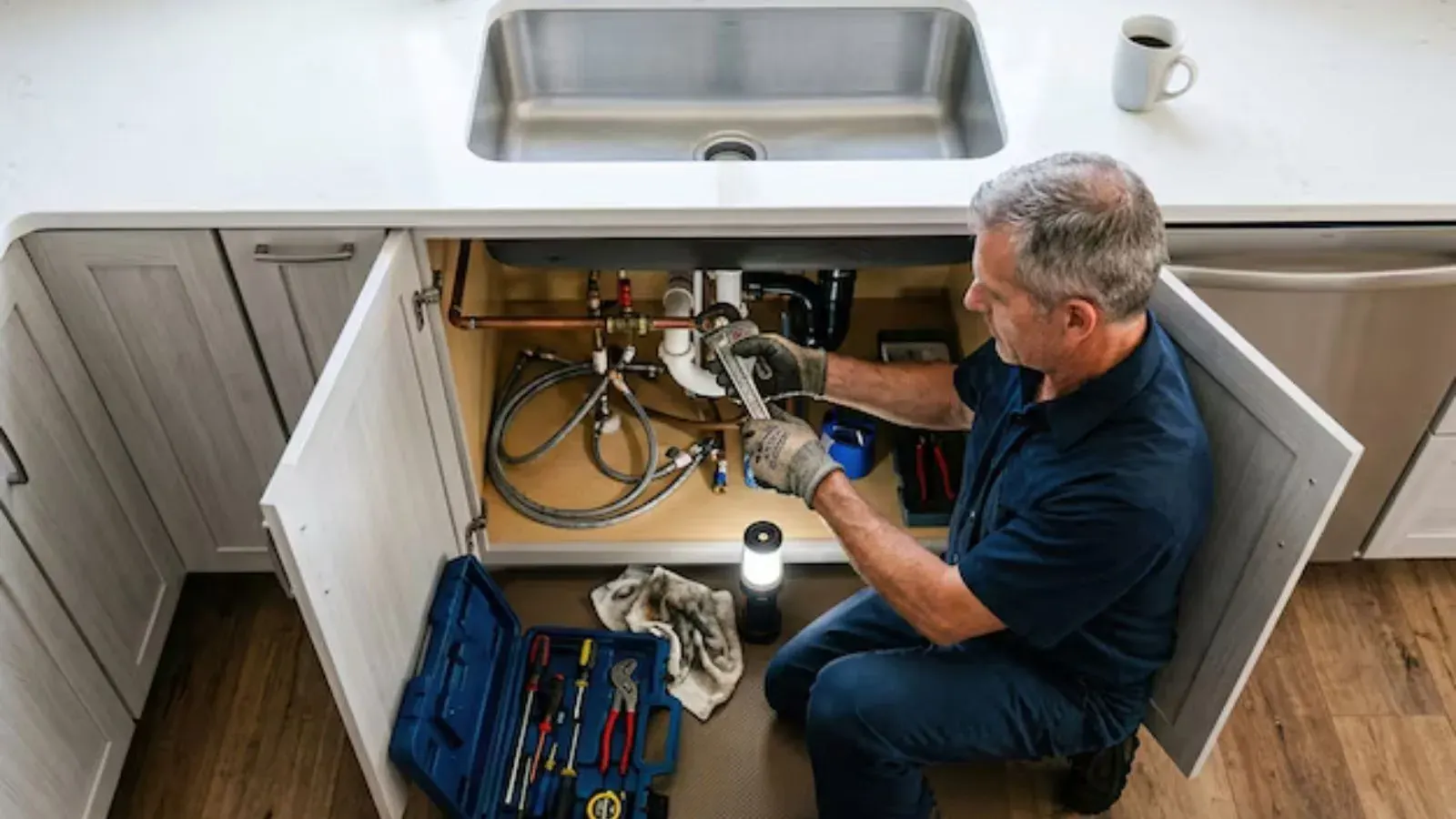
A bathroom sink that drains slowly but never fully blocks usually has a partial blockage, a pop-up stopper that catches hair, or a vent that is not letting air in behind the water. Most of the time the cause sits within arm's reach, in the first few inches below the drain opening. Sometimes it sits in the trap, and now and then in a vent you cannot see.
Work from the top down: stopper first, then trap, then watch what the other fixtures do. If a toilet gurgles or the tub drains slowly at the same time, the trouble is farther down the line, and that is where a plumber with a drain machine or a camera earns the visit. Brookline's older housing stock makes that second case worth knowing about, and the local note below explains why.
Signs of a partial blockage rather than a full clog
A full clog stops water. A partial one slows it, and the pattern tells you a lot about where it lives. The same checks apply to older apartments in neighboring Allston and Brighton.
- Shallow pool. The basin keeps a thin film of water for 10 to 30 seconds after the faucet is off.
- Gradual decline. The drain got a little slower each week instead of failing overnight, which points to hair and soap film.
- Gurgle at the end. A glug as the last water leaves means the pipe is pulling air through the trap because the vent is not supplying it.
- Smell from an empty drain. A faint sewer odor can mean a trap seal being siphoned out or a dry trap, both linked to slow flow and venting.
- Slow only with company. If the sink is fine alone but slows when the shower or washing machine runs, the shared branch line is the suspect.
Stopper clean and still slow?
Describe the sink to dispatch and we will tell you what to expect.
Check the pop-up stopper first
The stopper assembly catches more hair than any other part of a bathroom sink, and it is the easiest to reach.
- Lift it out. Many stoppers pull straight up. Others are held by a pivot rod, so look under the sink for a horizontal rod and a retaining nut behind the tailpiece.
- Clean what comes up. Expect a gray, slimy clump of hair wrapped around the stopper's crossbar. Wipe it off with a paper towel and rinse the stopper.
- Probe the drain throat. A plastic barbed strip, sold at hardware stores, pulls out hair that sits just below the opening. Do not push a stiff wire down the drain, because it can scratch the pipe.
- Check the lift. With the lever pulled, the stopper should rise high enough to clear the opening by a good fraction of an inch. A stopper that only lifts a sliver restricts flow even when the pipe below is clear.
- Run the water. Fill the basin halfway and open it. A clear drain empties in a smooth swirl with no pooling at the end.
The trap holds more than you would think
The curved trap under the sink holds standing water to block sewer gas, and it also collects soap film, toothpaste grit and the occasional ring. Put a bucket under it, loosen the two slip nuts by hand (most are plastic or chrome-plated brass), and slide the trap off. Empty it, rinse it, and look through the pipe that runs into the wall.
Reinstall the trap with the washers seated flat and tighten the nuts hand-snug, then run water and watch the joints for drips. If the pipe going into the wall is coated thick with sludge, stop there. That arm and everything behind it is the branch line, and a drain machine is the right tool for it, not a longer wire from the hardware store.
Which cause fits your sink
| Cause | What you notice | Who fixes it |
|---|---|---|
| Hair and soap film at the stopper | Slow for weeks, clean drain looks fine below | You, with a barbed strip |
| Stopper not lifting far enough | Slow even after the pipe is clean | You, by adjusting the lift rod |
| Partial trap blockage | Pooling plus a gurgle at the end | You with a bucket, or a plumber |
| Scale or film in the branch line | Sink and tub both slow | A plumber with a drain machine |
| Blocked or partly blocked vent | Glugging, slow only when other fixtures run | A plumber |
| Main line partly blocked | Several fixtures slow, basement drain bubbles | A plumber, or the Town if the problem is in the public main |
When the vent is the real problem
Every drain needs air behind the water, the same way a bottle needs a second opening to pour smoothly. That air arrives through a vent pipe that runs up inside a wall and out the roof. If a nest, leaves or a winter frost closure narrows the opening, the water has to drag air through the trap instead, and the sink drains slowly with a gurgle.
A vent problem rarely shows on one fixture alone. Watch for glugging in the bathroom while a washing machine drains, or a sink that is fine in the morning and slow after the shower runs. Do not climb onto a roof to look. Clearing or repairing a vent is a plumbing alteration that needs a permit pulled by a licensed plumber, and a fall from a pitched Brookline roof is the more serious risk.
Why drain cleaner makes this worse
Caustic cleaners work slowly on a partial blockage and sit in the trap while they do. When you open that trap later, the liquid is still in there, and it burns skin and eyes. In older metal pipe it also eats at joints that were already thin.
Hot water and a barbed strip do more for hair and soap film than any bottle. If you want to try vinegar and baking soda, treat it as a gentle rinse, not a repair, and do not combine it with a commercial cleaner.
When the problem is the main line
Three signs point past the bathroom: a toilet that gurgles when the sink drains, a tub that slows in step with the sink, and a basement floor drain that bubbles. Together they say the shared line is narrowing, and no amount of work at the sink will fix it. A plumber can run a drain machine through the branch.
Our drain cleaning service covers that. For a line that keeps slowing, sewer line cleaning clears the main run to the street.
If you can see water backing up out of a floor drain, treat it as an urgent call. Keep people away from the wet area and call dispatch at (617) 752-0573.
Why older Brookline plumbing slows sinks down
Census ACS data for 2020 to 2024 put Brookline's median year built at 1938, and 51.7 percent of the town's housing units date from 1939 or earlier. Pipe that old has had decades to collect scale, soap film and rough joints, which narrows drain lines and makes a partial blockage more likely than a sudden one.
The same Census tables show that 76.5 percent of Brookline units sit in buildings with two or more units. In those buildings several sinks and tubs often share one vertical drain, so a slow sink can come from the stack above or below you and not from your own trap.
On the legal side, the state's consumer fact sheet says clearing a blocked drain does not need a plumbing permit, but altering vent or drain piping does, and permits are issued only to licensed plumbers. Brookline's Building Department states that homeowners cannot pull plumbing permits in town. For grease, Brookline's sewer guidance says never to pour it down sink drains, and it warns that wipes do not break down in the sewer and can cause clogs.
Slow bathroom sink questions
Slow flow with no full stop usually means water is squeezing past a partial obstruction. In a bathroom that is most often hair and soap film wrapped around the stopper or in the first few inches of the tailpiece. Less often it is the trap or a vent that is starved of air.
Yes. Without air entering behind the water, the drain moves slowly and glugs near the end. The giveaway is that the problem changes when other fixtures run, or shows up in more than one fixture. Vent repair needs a licensed plumber and a permit.
It can loosen light soap film, but it will not pull out a hair clump. Pull the stopper and clean it first, because that handles most slow bathroom sinks. If the drain is still slow after that, stop adding products and have the line checked.
Test the neighbors. If the tub drains slowly, a toilet gurgles when the sink empties, or a basement floor drain bubbles, the shared branch or main is involved. Call us at (617) 752-0573 and describe which fixtures are affected so we can send the right equipment.
Yes. Dispatch answers 24/7, and same-day appointments are available when schedules allow. A slow sink can usually wait for a day appointment, but a floor drain backing up cannot.
No, the state fact sheet says clearing a blocked drain does not need a permit. Altering drain or vent piping does, and in Brookline the permit must be pulled by a licensed plumber because homeowners cannot pull plumbing permits there.
A slow drain is easier to fix early.
Call (617) 752-0573 and we will line up a visit.